Timeless quotes from Steppenwolf
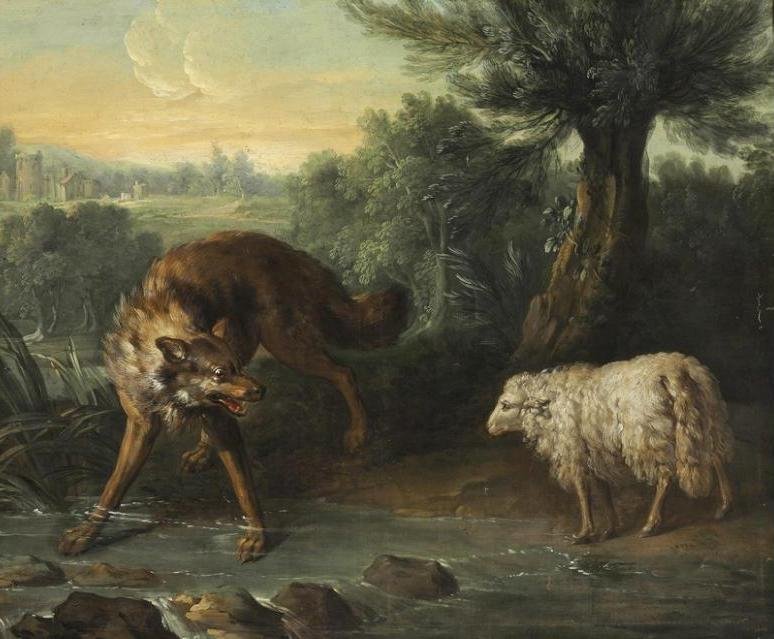
In an author’s note for the 1961 edition of Steppenwolf, Hermann Hesse described the novel as his most “violently misunderstood” work, especially by its proponents. He wrote:
“Yet it seems to me that of all my books Steppenwolf is the one that was more often and more violently misunderstood than any other, and frequently it is actually the affirmative and enthusiastic readers, rather than those who rejected the book, who have reacted to it oddly.”
What is it about this book that’s so conducive to misinterpretation? Many believe the novel is nihilistic since the protagonist is, for the most part, disillusioned with society and lacks purpose. But at its core, Steppenwolf is a spiritual novel about life, death, and eternity.
The novel follows the oddball character Harry Haller, who despite his intellect—or perhaps because of it—feels more wolf than man. He leads a mundane, solitary life and is wracked with ample physical ailments (like chronic pain, insomnia, and digestion issues), but his life takes an exciting turn one night when he discovers a paper from a strange figure: Treatise on the Steppenwolf, meant “Only for the insane.”
If you like novels with philosophical themes, there’s a good chance you’ll enjoy reading Steppenwolf. It’s ripe with ideas from thinkers like Goethe and Nietzsche, as well as Buddhist underpinnings throughout.
Steppenwolf is filled with beautifully written, thought-provoking passages. Here are 20 of the best quotes from Steppenwolf:
Steppenwolf quotes about dualities
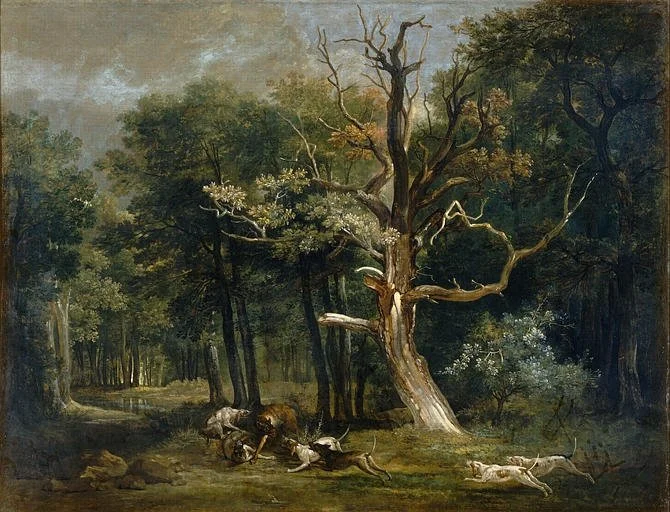
Buddhism is central to Steppenwolf, and we see its influence in the novel’s exploration of dualities. In the following passages, Hesse examines the dichotomy of the “self”—the tension between our rational, intellectual nature and our animalistic, instinctual nature. He also expands this theme to explore the complexity of the soul, not as a fixed, single entity but as a fragmented, ever-changing existence.
“So that was the scent that had risen so ripe and full from the summer rose: the scent of departure, of autumn, of destiny.”
“For man is not a fixed and enduring construction (as the classical ideal had it, despite the dissenting insights of the wise), rather he is an attempt and a transition, he is nothing other than the narrow, perilous bridge between nature and spirit. His innermost sense of purpose drives him to the spirit, to God—his inmost desire pulls him back to nature, to the mother: his life teeters, fearful and trembling between these two powers.”
“Those who grew fond of him always saw only one side of him. Some loved him as a fine, clever, and singular person and were horrified and disappointed when they were suddenly forced to discover the wolf within him.”
“Even animals do not have unified souls—that in them, too, behind their taut, elegant bodies, a multitude of aspirations and conditions can be found, that the wolf, too, has abysses within him, that the wolf, too, suffers.”
***
For a brief interlude…check out these articles for more insights + subscribe to my newsletter:

Steppenwolf quotes about longing for eternity

A recurring theme in Steppenwolf is the longing for something beyond our individual experiences—a yearning for life after death and a connection to the infinite. This desire for eternity represents the struggle to reconcile our present existence with a pull toward something greater. The following quotes capture a sense of eternal homesickness.
“We people—the more demanding ones, with our longings, with our one dimension too many—none of us would be able to live at all if there weren’t some other air to breathe beyond the air of this world, if there weren’t something beyond time—eternity, and that is the realm of the authentic.”
“The communion of saints was depicted by the painters of ages past in a golden heaven, radiant, beautiful, and peaceful—and that’s just what I called ‘eternity’ before. It’s the kingdom beyond all time and appearances. That’s where we belong, that’s our home, the place our heart strives for Steppenwolf, and that’s why we long for death… And we have no one to guide us, our only guide is homesickness.”
“Seriousness, my boy, is a question of time; it arises, this much I will tell you, from an overestimation of time. I, too, once overestimated the value of time; that’s why I wanted to live to be a hundred years old. But in eternity, you see, there is no time; eternity is a moment, just long enough to have fun.”
Steppenwolf quotes about solitude
Solitude defines much of Harry Haller’s life; he spends most of his time alone. As an outsider, Haller offers a unique perspective on society and the human condition. These passages capture both the pain and pleasure of solitude.
“If you need other people’s permission before you can enjoy yourself, then you really are a poor rascal.”
“It was something inconceivably beautiful and new for me—a disenchanted man who had gone so long with nothing to wait for, nothing to look forward to—it was wonderful to run back and forth all day long, filled with restlessness, anxiety, and eager anticipation, to imagine in advance how we would meet, what we would talk about, where the evening would lead, to shave and dress for it (with special care, a new shirt, a new tie, new shoelaces).”
“The reason you like me, and the reason I’m important to you, is that I’m a kind of mirror for you, that there’s something inside of me that responds to you and understands you.”
“While I was making an effort to say and ask only the most harmless things, I ate more than was my custom, and felt more miserable with each passing moment. My God, I kept thinking, why are we trying so hard?”
Steppenwolf quotes about innocence and guilt
Another key theme in Steppenwolf is the tension between innocence and guilt. Instead of idealizing innocence, Hesse suggests that sin is an inevitable part of life and a crucial step towards understanding and growth. The novel emphasizes the value of all aspects of experience—embracing life’s complexities and throes.
“What lies at the origin of all things is not innocence and simplicity; everything that is created, even the most seemingly simple thing, is already guilty, is already rich in contradictions, it has been thrown into the dirty stream of becoming, and can never, never swim back upstream.”
“That’s the official procedure. First they have to atone for the guilt of their time, and once they’re done with that, it will become clear whether they bear enough personal guilt to justify any further reckoning… You also can’t help it that Adam ate the apple, and yet you must atone for it.”
“The path to innocence, to the uncreated, to God, does not lead backward, but rather forward, not to the wolf or the child, but rather deeper into sin, deeper into the human.”
“Rather than narrow your world, rather than simplify your soul, you will have to take more and more world—and finally the entire world—into your painfully expanded soul, in order perhaps to finally reach the end, to come to rest.”
Steppenwolf quotes about death

Death is a central theme in Steppenwolf, and it’s deeply intertwined with the concepts of eternity and living fully. For Hesse (and in Buddhist thought), death isn’t an end but a transformation. These quotes explore the relationship between life, death, and the spiritual growth that comes from confronting both.
“You want to die, you coward, but not to live, But damn it, you’re supposed to be figuring out how to live!”
“Do we humans live in order to abolish death? No, we live to fear it and then again to love it, and it is precisely because of death that our little bit of life sometimes shines so beautifully for an hour.”
“He closes his eyes and refuses to know that his desperate clinging to the ‘I,’ his desperate avoidance of death, is in fact the most certain path to eternal death, whereas the ability to die, to shed one’s outer husk, to abandon oneself eternally to change, leads to immortality.”
“The goal of all my longing is not to hold on to this happiness forever, but to suffer again, only more beautifully and less wretchedly than before. I long for a kind of suffering that makes me ready and willing to die.”
An ultimately uplifting message
Through its exploration of dualities, eternity, death, and more, Steppenwolf offers readers a thought-provoking exploration of the human condition—which is, at times, full of despair and loss but also full of hope and transformation.
Hesse himself clarified this intended message in the same author’s note we saw at the beginning of this article:
“I would be happy if many of them were to realize that the story of the Steppenwolf pictures a disease and crisis—but not one leading to death and destruction, on the contrary: to healing.”
There are many more memorable quotes and themes from Steppenwolf—commentaries on suffering, extremes, the state of society, and more.
If you enjoyed reading Steppenwolf, I recommend checking out Siddhartha (also written by Hesse, and, in my opinion, his best work). You also might enjoy Milan Kundera’s novels Immorality (which is very similar to Steppenwolf) and The Unbearable Lightness of Being.
Are there any other quotes you loved from the novel or similar reads? Share your thoughts in the comments below!


At around 130 pages, Milan Kundera’s seventh novel Slowness (1995) is concise, unusual, and compelling.