Slowness: Milan Kundera on pleasure and memory
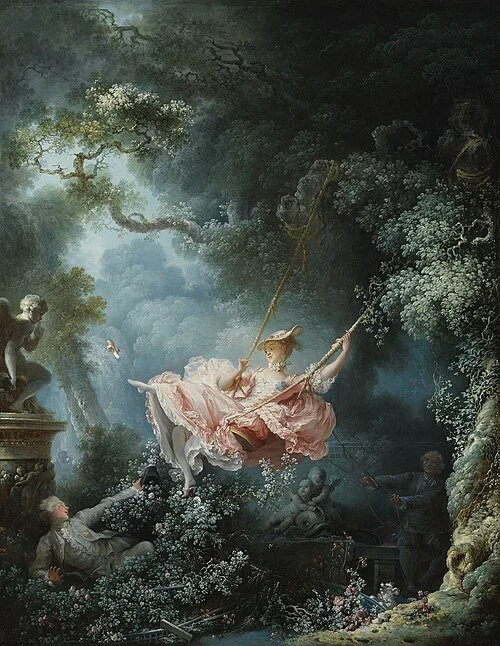
At around 130 pages, Milan Kundera’s seventh novel Slowness (1995) is concise, unusual, and compelling. The novel follows a couple visiting a chateau in the French countryside and interweaves this with the storyline from the 18th century French novella Point de lendemain (No Tomorrow) by Dominique Vivant Denon.
If you haven’t read Kundera’s works, Slowness offers a good taste of his writing and narration style; Kundera often inserts himself into his stories, and here, he’s actually the narrator. As the title hints, Slowness centers around the passage of time and memory which are themes Kundera explores extensively in his later novel Ignorance.
The novel raises the questions of why we remember the things we do and, perhaps, what we should strive for in our experiences to better enjoy them. But to answer these questions, rather than starting with time or memory, we’ll start with pleasure.
Pleasure as the absence of suffering
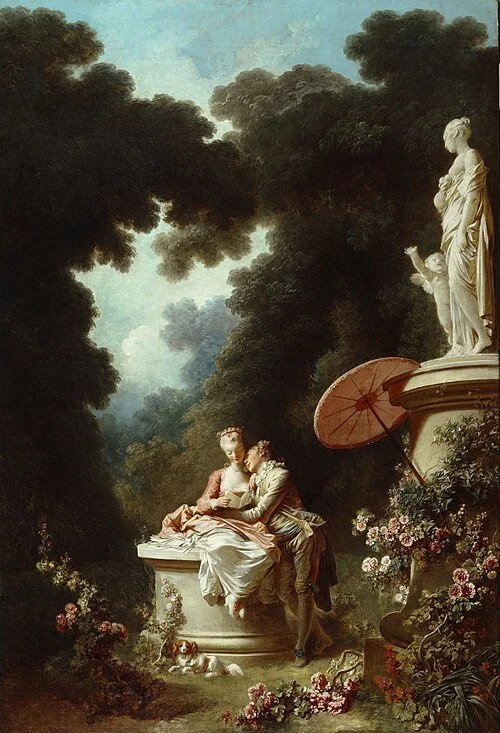
Kundera begins his novel with a brief exploration of hedonism. While this may seem random in relation to time and memory, it forms a base for how we can think about them. Bear with me on this one, as I’ll tie it together by the end.
Hedonism, or viewing pleasure as the highest source of good in life, is often considered an excessive, selfish, and amoral pursuit. However, as Kundera explains, the Greek philosopher Epicurus propelled a more sobering understanding of the school of thought:
“Epicurus, the first great theoretician of pleasure, had a highly sceptical understanding of the happy life: pleasure is the absence of suffering. Suffering, then, is the fundamental notion of hedonism: one is happy to the degree that one can avoid suffering.”
In this light, hedonism isn’t amoral or indulgent, but completely rational; Epicurus ultimately recommended moderation since extreme pleasures tend to bring more pain than satisfaction. Just imagine eating an entire box of chocolates in one sitting. You’d be happy for the first few pieces, but by the time you finish the box, you’d likely feel sick.
But interestingly, Kundera believes hedonism—the absence of suffering—is too optimistic an aim, and incompatible with human nature.
“As I see, it, the Achilles’ heel of hedonism is not that it is self-centred but that it is (ah, would that I were mistaken!) hopelessly utopian: in fact, I doubt that the hedonist ideal could ever be achieved; I’m afraid the sort of life it advocates for us may not be compatible with human nature.”
Kundera concludes that what many people are driven by isn’t pleasure but the conquest ofpleasure. He defines this as the desire for victory—public victory, rather. Whereas pleasure yields genuine happiness, the conquest of pleasure is hollow and performative. This takes a clear example in his novel when one of the main characters, Vincent, pursues a woman not to be with her, but to be seen with her.
But what does this have to do with time?
Demarcating time
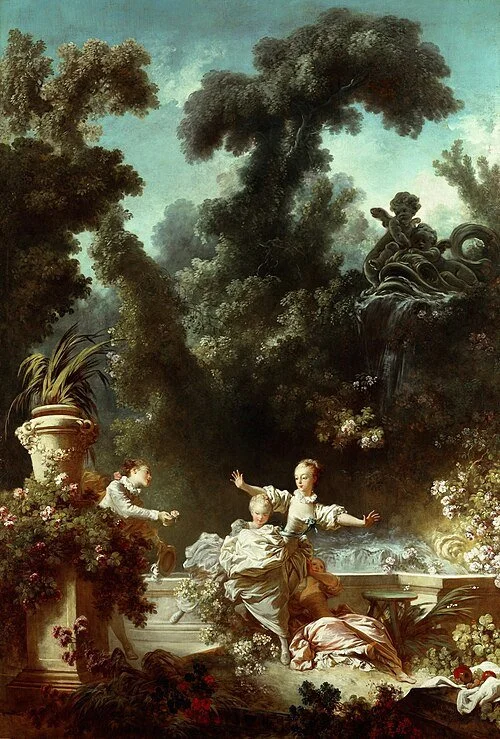
The interesting idea Kundera raises about time in Slowness is that we have to apply external boundaries—a change of place, an event, a departure or return—to both remember our experiences and enjoy them fully. Kundera writes:
“Imposing form on a period of time is what beauty demands, but so does memory. For what is formless cannot be grasped, or committed to memory.”
For example, in Slowness, the couples intentionally change venues throughout the evening as their courtship progresses. Dividing the night into stages gives the characters’ romantic encounters—which take place over a single night—a distinct, prolonged quality. The night feels slower.
Why? Because there’s a direct relationship between slowness (marking time) and memory. Kundera captures this relationship in a proportion:
“There is a secret bond between slowness and memory, between speed and forgetting [...] The degree of slowness is directly proportional to the intensity of memory. The degree of speed is directly proportional to the intensity of forgetting.”
By slowing an experience—e.g. dividing it into stages—it becomes more memorable. Going back to the chocolate example, if you ate a few pieces of chocolate at home, a few more in your car, and finished the rest at a park, you’d probably differentiate and savor the flavors. But if you ate them all on the couch over the same time period, the flavors (and the memory) would likely blur into a homogenous, unremarkable mass.
Slowness—lingering in an experience, contemplating it, paying it attention—makes memories more vivid and intense.
***
For a brief interlude…check out these articles for more insights + subscribe to my newsletter:


Slowness and intensity

The degree of slowness (or the intensity) of an experience impacts more than our perception of time; it also impacts time itself. Kundera illustrates this concept:
“Consider this utterly commonplace situation: a man is walking down the street. At a certain moment, he tries to recall something, but the recollection escapes him. Automatically, he slows down. Meanwhile, a person who wants to forget a disagreeable incident he has just lived through starts unconsciously to speed up his pace, as if he were trying to distance himself from a thing still too close to him in time.”
When we try to remember something, we move more slowly. We linger. When we want to forget, we move faster. Speed creates a condition where the present is constantly being replaced by the next event. We don’t dwell on what’s happened because we’re already moving towards something else. Speed becomes a way of compressing memories.
Is pleasure the ultimate slowness?
.jpg)


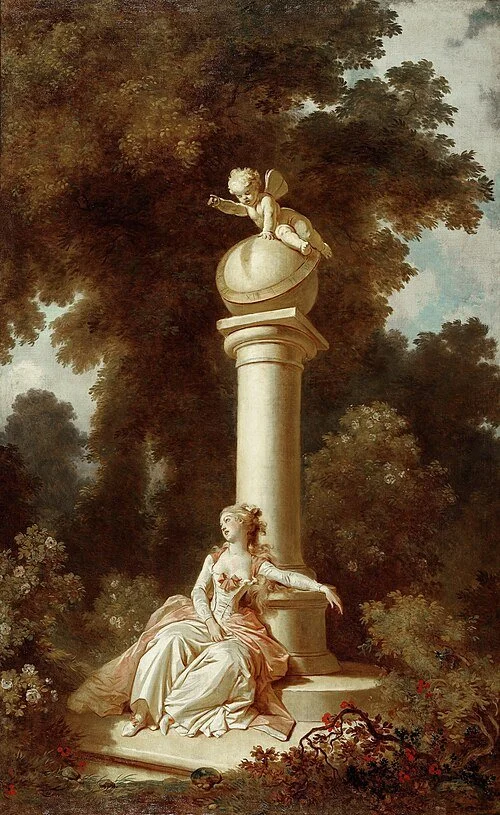
If speed is a way of escaping (usually negative) experiences and slowness is a way of intensifying (usually positive) experiences, is pleasure necessarily slow?
One of Kundera’s gripes in the novel is how modernity has fallen prey to the “demon of speed.” Everything happens too quickly, everyone wants to forget unpleasantness. Kundera writes:
“Our period is obsessed by the desire to forget, and it is to fulfil that desire that it gives over to the demon of speed; it picks up the pace to show us that it no longer wishes to be remembered; that it is tired of itself, sick of itself; that it wants to blow out the tiny trembling flame of memory.”
Now, more than thirty years after the novel was first published, we are inundated with immediacy. We’ve become unaccustomed to boredom, to waiting, to “gazing at God’s windows” — a Czech proverb Kundera cites at the beginning of the novel, meaning the happiness of doing nothing.
Pleasure, then, is found in remaining inside of our experiences. The challenge is remaining present long enough to experience them as something other than a conquest or escape.
Have you read Slowness or other of Milan Kundera’s works? What did you think of Kundera’s ideas about pleasure and memory? Leave your thoughts in the comments section below!
If you liked this post, check out these:
Memory and the illusion of time in Milan Kundera’s novels
At around 130 pages, Milan Kundera’s seventh novel Slowness (1995) is concise, unusual, and compelling.