What makes a Gothic novel and 8 of my favorites

From the dark labyrinths of The Castle of Otranto to the sweeping, fickle moors of Wuthering Heights, Gothic literature is dramatic, eerie, and extremely satisfying to read. But what makes the genre so compelling isn’t necessarily its symbolic settings or ghoulish adversaries, rather that it’s deeply psychological.
Gothic literature is centered around the repression of desires. Suppressed desires, buried memories, forbidden knowledge, and entrenched power structures lurk beneath the surface of these stories, ready at any moment to destablize the apparent order of the world.
With a Bachelor’s in English and a Master’s in Creative Writing, Gothic literature was my favorite genre to study. If you’re looking for your next read or want to understand more about the genre, this post walks through key features of the Gothic stories and some of my favorites.
The evolution of Gothic literature
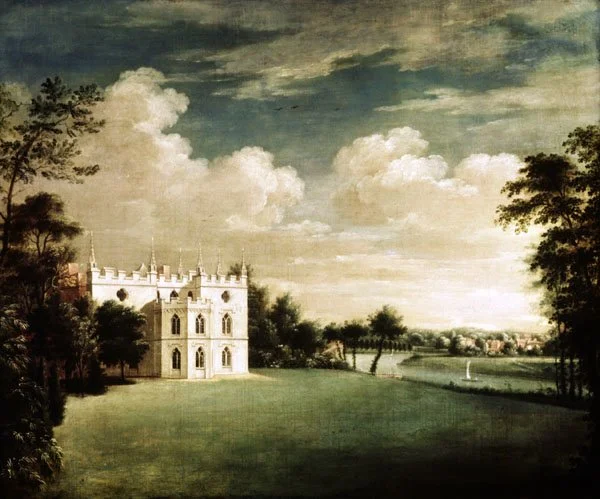
The Gothic novel originated in 1764 with the publication of Horace Walpole’s The Castle of Otranto after Walpole dreamt about the armor in his Gothic mansion Strawberry Hill House. In a letter to his friend William Cole, Wallace wrote,
“I waked one morning in the beginning of last June from a dream, of which, all I could recover was, that I had thought myself in an ancient castle (a very natural dream for a head like mine, filled with Gothic story), and that on the uppermost banister of a great staircase I saw a gigantic hand in armour. In the evening I sat down and began to write, without knowing in the least what I intended to say or relate.”
So how does the first Gothic novel compare to existing stories? Walpole was influenced by the five-act structure of Shakespeare’s plays and the prophecies, enchanted objects, and hiddens heirs of medieval chivalric romances, which are traits that the genre evolved from. Still, The Castle of Otranto established a number of tropes of Gothic literature like haunted castles, subterranean chambers, sublime forces of nature, persecuted heroines, and overbearing patriarchal figures.
Interestingly, even Jane Austen came to satirize these tropes in her novel Northanger Abbey (1817), which follows a young woman named Catherine Morland as she models her behavior off the many Ann Radcliffe novels she reads.
Over time, the genre adopted a more psychological focus and, in many cases, grew to showcase the dark side of the Age of Enlightenment. Where the Enlightenment favored order, rationality, and reason, Gothic literature often disrupted that rationality and order. For example, the monstrous creature in Mary Shelley’s Frankenstein or the Modern Prometheus shows intellectual creation gone awry.
Across the centuries, the genre also evolved in many directions, including the (American) Southern Gothic, with the likes of Edgar Allen Poe, William Faulker, Zora Neale Hurston, and Toni Morrison.
Key features of the genre

Two of the most effective devices that destabilize Gothic stories are doubles and the uncanny. But what exactly is a double? In his book Uncanny Doubles: Doppelgängers, Twins, Clones and the Gothic, Simon Bacon notes that the double is a figure that externalizes what’s been repressed and takes the form of “twins, doppelgängers, shadow-selves, and even ghosts, and spectres (uncanny copies of the living).”
Some of the most famous literary doubles include the respectable Dr Jekyll and the depraved Mr Hyde in Robert Lewis Stevenson’s The Strange Case of Dr Jekyll and Mr Hyde, the portrait and Dorian from Oscar Wilde’s The Picture of Dorian Gray, and Jane and Mr. Rochester’s wife from Emily Brontë’s Jane Eyre.
The reason doubles are so unsettling is because they shift the locus of fear inward. Rather than confronting an external threat, characters are forced to acknowledge the aspects of themselves they’ve tried to suppress, like their darker desires or capabilities. The dark double exposes what the character is suppressing.
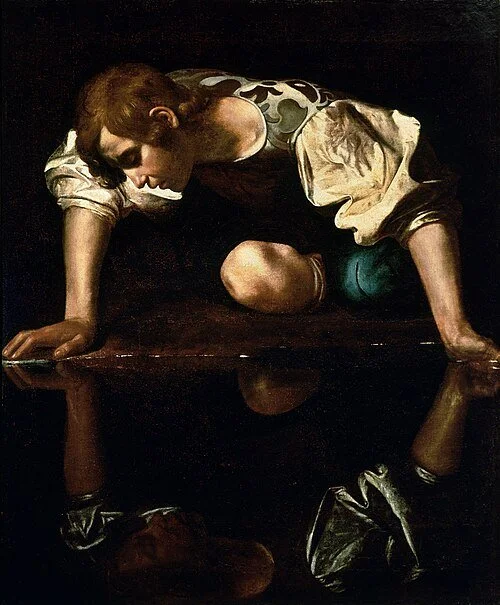
In her book The Modern Gothic and Literary Doubles, Linda Dryden writes that “the fiction of duality usually reverses that [external] anxiety, turning it in upon ourselves to explore our horror at what we may be capable of.” Because the danger in Gothic stories is embedded within a character, it’s inescapable. And that’s terrifying!
Sigmund Freud’s concept of the uncanny helps explain why doubles create such unease: “the ‘uncanny’ is that class of the terrifying which leads back to something long known to us, once very familiar.” The Gothic double is inherently uncanny because what disturbs a character isn’t how their double is different, but similar; the double’s rejected qualities are revealed to be part of the character’s own identity.
Without furtherado, here are ten of my favorite Gothic works across novels, novellas, and short stories.
8 of the best Gothic novels and stories
1. Wuthering Heights by Emily Brontë (1847)
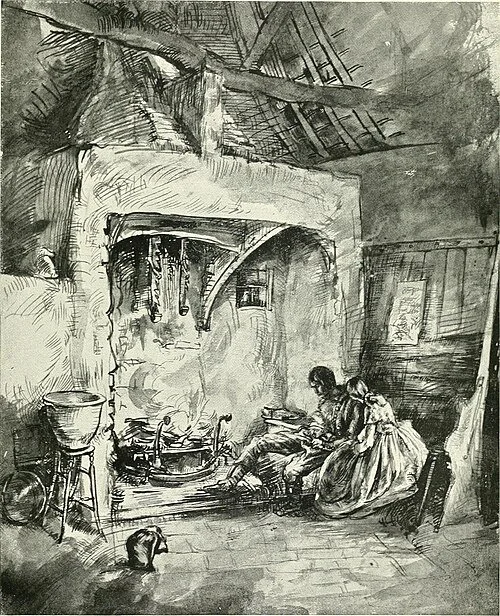
An outsider arrives at the sprawling Yorkshire moors of Wuthering Heights where he meets the manor’s bristly owner, Heathcliff. Soon, he learns of the strange behaviors of its inhabitants and their sordid past, including the infamous love triangle between the beguiling Catherine Earnshaw, the mercurial Heathcliff, and the docile Edgar Linton.
The novel will ensnare you with its dramatic language, overwhelming natural settings, unusual obsessions, and generational evils. How can one love a book with such unlovable characters!
Favorite quote: “‘May she wake in torment!’ he cried, with frightful vehemence, stamping his foot, and groaning in a sudden paroxysm of ungovernable passion [...] Be with me always—take any form—drive me mad! only do not leave me in this abyss, where I cannot find you!”
Fun fact: Wuthering Heights was originally published under Brontë’s pen name, Ellis Bell. Also, I do NOT recommend seeing the movie “adaptation” directed by Emerald Fennell. It failed to capture even the basic essence of Brontë’s novel.
2. Frankenstein or the Modern Prometheus by Mary Shelley (1818)
In this cautionary tale about playing God, the brilliant scientist Dr. Victor Frankenstein creates a companion—a creature lonlier than Satan—and is left to deal with the disastrous consequences. With loneliness and isolation as its core themes, the novel was likely inspired by the series of tragedies in Shelley’s life, having grown up without a mother (Mary Wollstonecraft, who died ten days after giving birth to Mary) and dealing with a series of miscarriages, whereby only one of her four children survived.
Favorite quote: “God, in pity, made man beautiful and alluring, after his own image; but my form is a filthy type of yours, more horrid even from the very resemblance. Satan had his companions, fellow-devils, to admire and encourage him; but I am solitary and abhorred.”
Fun fact: Shelley was heavily influenced by John Milton’s Paradise Lost and the myth of Prometheus, a Greek titan who was gruesomely punished for eternity for stealing fire from the gods to help mankind. Also, I would recommend the movie adaptation by Guillermo del Toro; it was visually stunning and captured the Gothic aesthetic.
3. The Strange Case of Dr Jekyll and Mr Hyde by Robert Lewis Stevenson (1886)
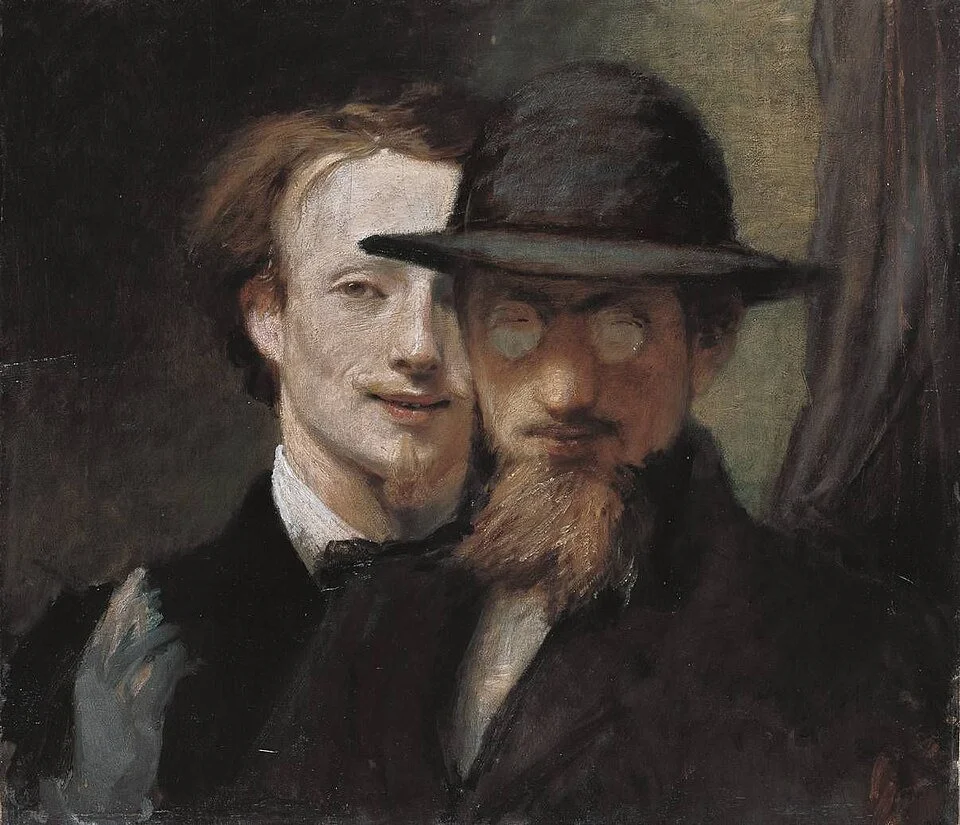
Set in London, a lawyer named Mr Utterson investigates an incident after an unsettling, remorseless man, Mr Hyde, tramples a child in the street in broad daylight. Soon, Mr Utterson discovers a strange connection between the depraved Mr Hyde and his friend and client, Dr Jekyll.
Favorite quote: “O my poor old Harry Jekyll, if ever I read Satan’s signature upon a face, it is on that of your new friend.”
Fun fact: The novella was likely inspired by Deacon William Brodie, a wealthy upper-class gentleman in Edinburgh who made cabinets and locks by day and and stole by night. Stevenson himself also frequented brothels and drank heavily during his youth, providing ample fodder for Mr. Hyde.
4. Dracula by Bram Stoker (1897)
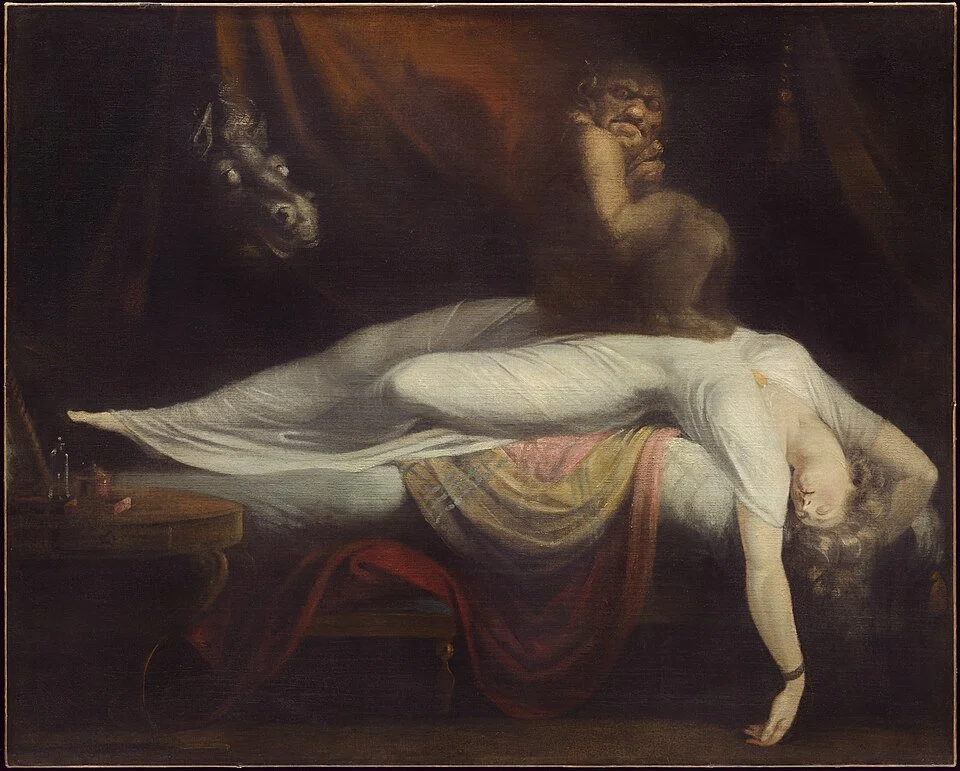
English solicitor Johnathan Harker travels to the depths of Transylvania to close a business deal with the strange Count Dracula. Soon, Dracula, with his vampire brides, ability to scale the castle walls, and power to command wolves, holds Harker prisoner as he becomes obsessed with and pursues Harker’s fiancée, Mina Murray.
Favorite quote: “What manner of man is this, or what manner of creature is it in the semblance of man? I feel the dread of this horrible place overpowering me; I am in fear—in awful fear—and there is no escape for me; I am encompassed about with terrors that I dare not think of....”
Fun fact: Dracula is written in the epistolary form (letters, journal entries, ship logs). The movie directed by Francis Ford Coppola is utterly stunning and has some beautiful lines that aren’t in the novel, like “I have crossed oceans of time to find you.”
5. “The Fall of the House of Usher” by Edgar Allen Poe (1839)
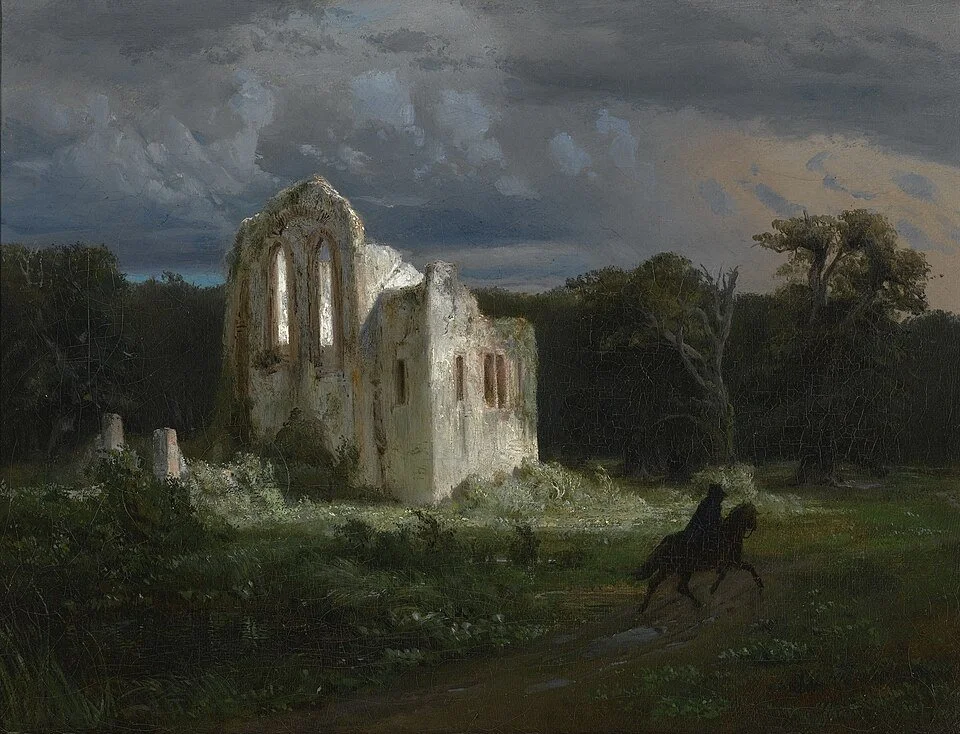
In this quintessentially Southern Gothic short story, an unnamed narrator visits a childhood friend, Roderick Usher, who’s the last male of his aristocratic bloodline. The narrator tries to console Usher as his twin sister is dying at their familial mansion. The prose in this story is exquisite, dramatic, and extremely atmopsheric as it grapples with the characters’ generational sins.
Favorite quote: “I looked upon the scene before me [...] with an utter depression of soul which I can compare to no earthly sensation more properly than to the after-dream of the reveller upon opium—the bitter lapse into every-day life—the hideous dropping off of the veil.”
Fun Fact: Claude Debussy was fascinated by “The Fall of the House of Usher” and felt inspired to create an opera and a “symphony on psychologically developed themes,” based on the story, however, he never realized these.
6. Gone with the Wind by Margaret Mitchell (1936)
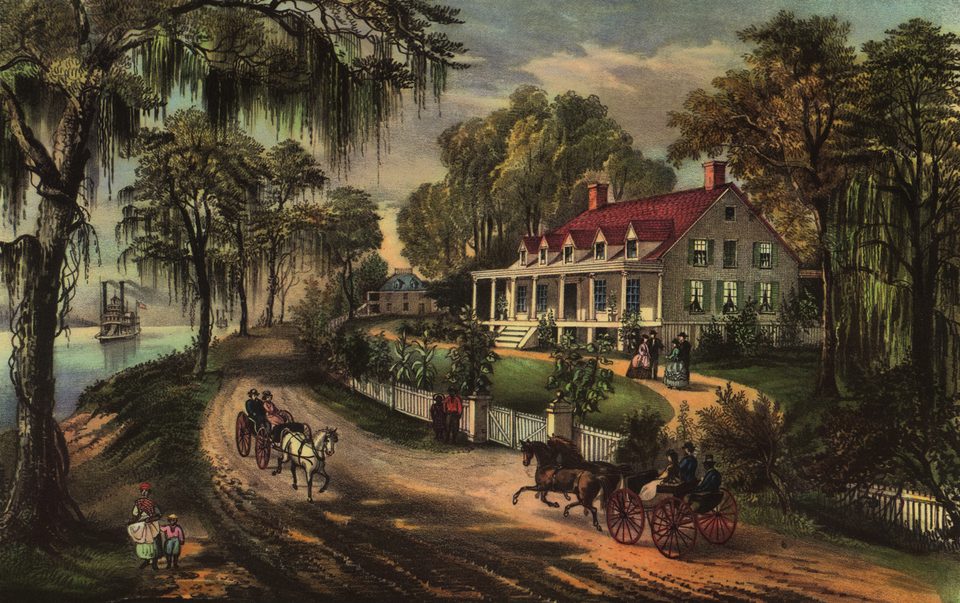
While technically classified as historical fiction, Gone with the Wind shares many traits of Southern Gothic literature. In the novel, the headstrong Scarlett O’Hara navigates life as a southern belle, where her greatest concern is choosing a paramour. When the Civil War breaks out, Scarlett’s beloved home and plantation, Tara, is left in ruins and Scarlett must bring her family out of poverty. The novel has one of the greatest love triangles of all times as Scarlett chooses between the roguish, charismatic Rhett Butler and the tame, respectable Ashley Wilkes.
This is the only work of fiction Mitchell published, vowing to a New York Times reviewer that: “I not only do not intend to set about another book too soon, but, thank God, never intend to write another one if I keep my sanity. I have heard other writers make that same remark and then observed that they were suddenly stricken with a novel while in their bath... I hope Fate will be kinder to me; I wouldn't go through this again for anything.”
Favorite quote: “Perhaps—I want the old days back again and they'll never come back, and I am haunted by the memory of them and of the world falling about my ears. ”
Fun fact: Mitchell spent eight years researching the American Civil War and the Reconstruction Era for historical accuracy in her novel, which won the Pulitzer Price for Fiction in 1937.
7. The Bloody Chamber by Angela Carter (1979)
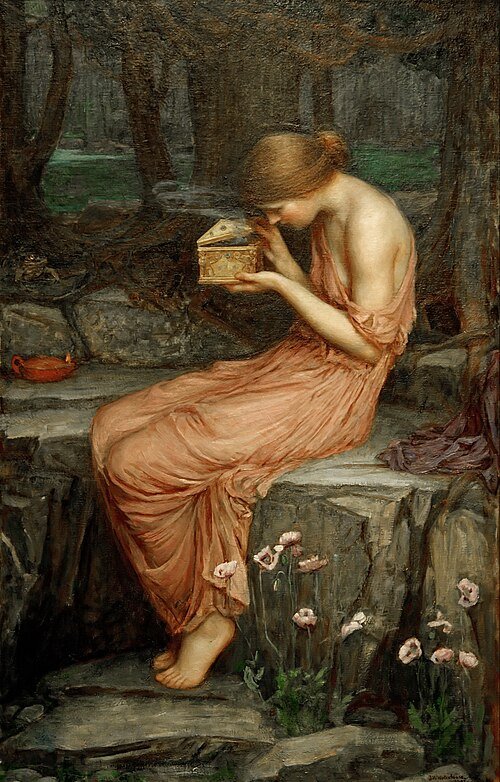
A young woman leaves home to marry the notorious Marquis de Sade in a remote castle by the sea. Soon, she discovers a dark secret as she adjusts to an unconventional marital life. From the story’s opening line to the last word, Carter’s utterly lush, sensory, and dream-like prose transports you to a surreal world.
Favorite quote: “I remember how, that night, I lay awake in the wagon, lit in a tender, delicious ecstasy of excitement, my burning cheek pressed against the impeccable linen of the pillow and the pounding of my heart mimicking that of the great pistons ceaselessly thrusting the train that bore me through the night, away from Paris, away from girlhood, away from the white, enclosed quietude of my mother's apartment, into the unguessable country of marriage.”
Fun fact: The novella is a modern re-imagining of Charles Perrault’s 17th century folktale “Bluebeard,” which warns the dangers of curiosity.
8. We Have Always Lived in the Castle by Shirley Jackson (1962)
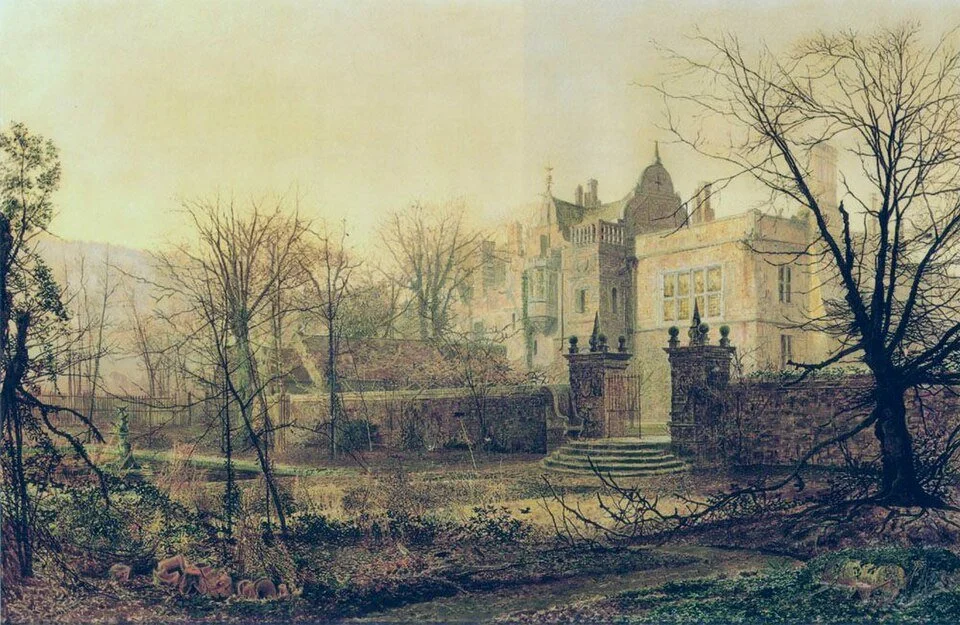
Set in an old fashioned New England town, We Have Always Lived in the Castle follows Merricat Blackwood as her oldest sister, Constance, rejoins her on their family’s estate. The story begins after Constance gets acquitted of poisoning seven family members by putting arsenic in their sugar bowl six years prior.
The novel draws you in with Merricat’s extremely distinctive voice, the strange circumstances surrounding the murders, and the unsettling divide between the Blackwoods and their local community as the characters try to regain a semblance of their old lives after the strange, traumatic event.
Favorite quote: “I like my sister Constance, and Richard Plantagenet, and Amanita phalloides, the death-cup mushroom. Everyone else in my family is dead.”
Fun fact: We Have Always Lived in the Castle was inspired by the real-life, unsolved Charles Bravo murder, where a British lawyer was poisoned in a genteel Victorian house and took four days to die, yet failed to explain how he could’ve been poisoned, propelling the theory that Bravo accidentally consumed poison he intended for his wife.
There are many other great Gothic works—honorable mentions go to Rebecca by Daphne du Maurier and “The Minister’s Black Veil” by Nathaniel Hawthorne. What are your favorite Gothic stories? Leave a comment below with your thoughts!
If you liked this post, check out these:
John Keats’ negative capability